
Hip Physio Milsons Point: Hip Pain Physio in Milsons Point
%20(1).svg)
.svg)

Hip Physio Milsons Point: Hip Pain Physio in Milsons Point
If you’re looking for hip physio Milsons Point care, you might be dealing with pain in the groin, outer hip, buttock, or upper thigh that’s affecting walking, stairs, running, or sleep. Hip symptoms are common in North Sydney office workers (especially with long sitting and commuting), local residents around Milsons Point and Kirribilli, and recreational athletes across the Lower North Shore. A personalised assessment can help clarify what’s driving your pain and what hip pain treatment options may be appropriate for you.

What is hip pain?
Hip pain is a broad term for discomfort around the hip joint and nearby muscles, tendons, and joints that influence hip movement. Some people feel pain deep in the front of the hip or groin, others feel it on the outside of the hip, and some notice it more in the buttock or lower back region.
Because the hip sits close to the lower back and pelvis, pain can sometimes be “referred” (felt in the hip even when the main driver is elsewhere). That’s one reason a thorough assessment matters—treatment is usually more effective when it targets the most likely contributing factors rather than just the painful spot.
Common areas people describe
- Front of hip or groin pain, often noticed with twisting, getting in/out of a car, or longer walks
- Outer hip pain, sometimes worse with side-lying, hills, or single-leg tasks
- Buttock pain, which may overlap with lower back symptoms
- Upper thigh tightness or aching with activity
Common signs and symptoms
Hip pain can present in many ways, and symptoms alone don’t confirm a diagnosis. People commonly seek hip pain treatment for:
- Pain when walking, especially on hills or stairs
- Discomfort getting up from a chair or after sitting for a long time
- Pain when rolling over in bed or lying on one side
- Stiffness in the morning or after commuting
- Pinching or catching sensations during hip flexion (like tying shoelaces)
- Pain with running, squats, lunges, or gym training
- Reduced hip range of motion, or feeling “stuck” in certain positions
- A limp or reduced confidence loading one leg
- Pain that spreads into the thigh, buttock, or knee
If symptoms persist, worsen, or interfere with daily life, it’s worth booking an assessment rather than trying to self-diagnose.
Why does this happen? Common contributing factors
Hip pain is often multifactorial, meaning several things can contribute at once. Common factors your clinician may explore include:
- Prolonged sitting and low movement variety, which can reduce tolerance to walking and loading
- Sudden increases in activity, such as longer walks, gardening, or a return to running
- Strength and endurance deficits, especially in the gluteal muscles and trunk
- Tendon sensitivity, where tendons react to rapid load changes or repeated compression positions
- Reduced mobility in the hip or upper back, which can shift load to sensitive areas
- Lower limb mechanics, including knee/ankle movement and foot strength
- Previous injuries, which can change how you move and share load across joints
- Recovery factors (sleep, stress, fatigue), which can influence pain sensitivity
In many cases, the goal is not to find one single “cause”, but to understand which factors are most relevant for you and how to change them in a realistic way.
Hip physio Milsons Point: how a physiotherapist (and team care) may help
A hip physio plan typically focuses on helping you move more comfortably, build capacity for the activities you need to do, and reduce the frequency and intensity of flare-ups over time. Care should be individualised, and outcomes vary between people.
Assessment and screening
Your physiotherapist will usually start by discussing:
- Your symptoms, including what aggravates and eases them
- Your workday pattern (common for North Sydney CBD office workers), commute, and sitting time
- Your sport or exercise routine (running, gym, Pilates, field sports)
- Any relevant medical history and screening for signs that may need GP review
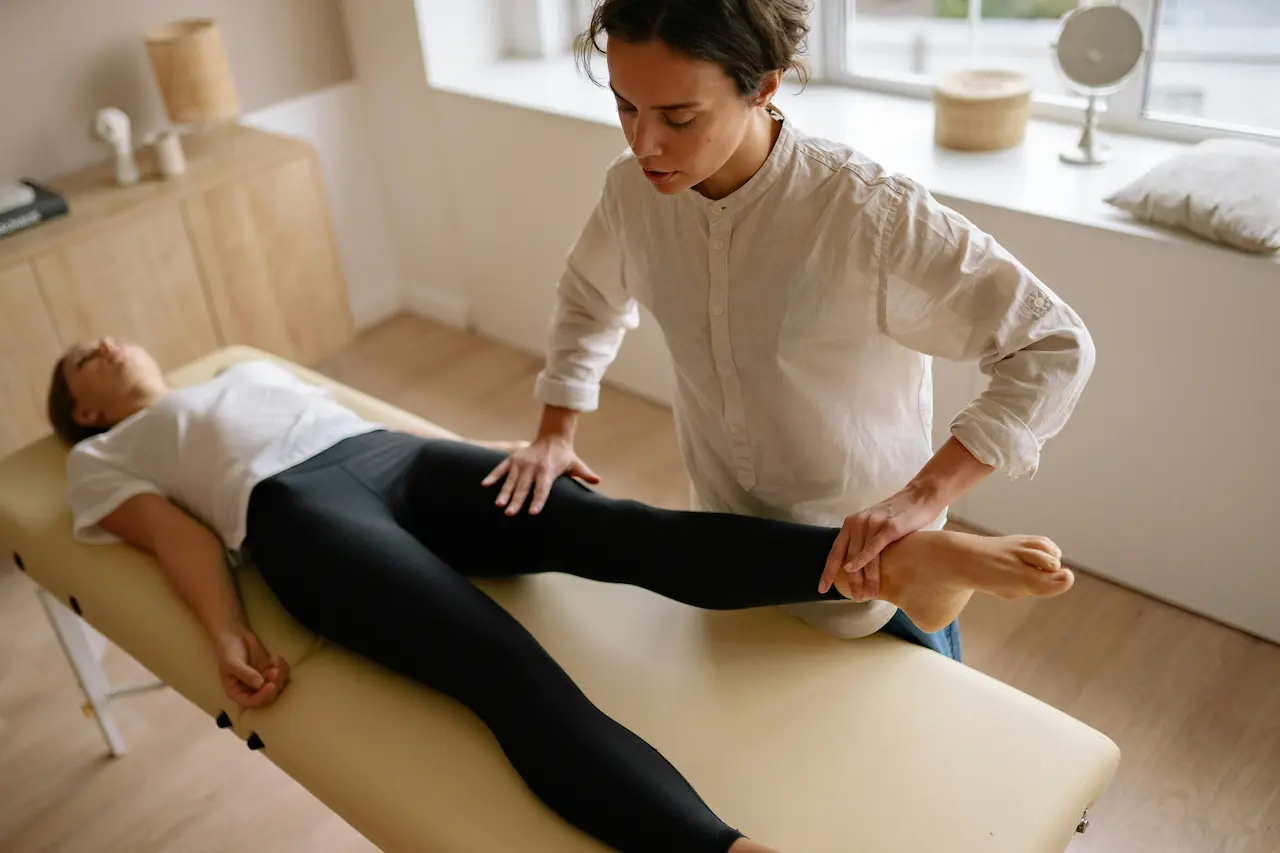
They may assess hip and lower back movement, strength, balance, gait (how you walk/run), and how symptoms respond to certain positions and loads. You should leave with a clear working explanation in plain language and a practical next-step plan.
Education and load management
Education is often a key part of hip pain treatment. It may include:
- Guidance on staying active while reducing unnecessary flare-ups
- A plan to avoid “boom–bust” cycles (doing a lot on good days, then crashing)
- Advice on pacing walks, returning to running, or modifying gym exercises
- Clear expectations about progression and when to adjust the plan
Research and clinical guidelines commonly support exercise-based rehabilitation for many musculoskeletal presentations, with manual therapy as an adjunct for some people.
Exercise-based rehabilitation
Exercise programs are tailored to your presentation and goals. They often include:
- Strengthening for glutes, hips, and trunk to improve load tolerance
- Single-leg control work for walking, stairs, and running demands
- Mobility exercises where stiffness is limiting movement options
- Gradual exposure to the activities that matter to you (for example, longer walks, running, or specific gym lifts)
If longer-term conditioning is part of your goal, exercise physiology input may help build a sustainable strength and fitness plan once symptoms are settling and key movement patterns are under control.

Hands-on treatment (when appropriate)
Some people find hands-on care helpful for short-term symptom relief or to make movement practice more comfortable. Depending on your needs, this might include soft tissue techniques or joint mobilisation.
In a multidisciplinary clinic, chiropractic care may be considered where spine, pelvic, or mobility factors appear to influence hip loading. Any hands-on care should be clearly explained, optional, and used alongside active strategies like education and exercise.
Work and lifestyle support
For people balancing hip symptoms with busy schedules, your plan may include:
- Practical strategies for breaking up sitting and commuting
- Advice on managing flare-ups during high-stress work periods
- Guidance for returning to sport or longer walks around the Lower North Shore
- Where relevant, occupational health support for work-related demands and safe participation at work
Self-care tips that may help
These are general suggestions and may not suit every situation. Seek personalised advice if pain is severe, worsening, or you’re unsure what’s safe.
- Break up long sitting with brief movement breaks every 303030–606060 minutes (a short walk or gentle hip movements)
- Keep activity within tolerance; aim for a level you can repeat consistently
- Temporarily reduce aggravating activities (like hills, deep squats, or long runs) rather than stopping all movement
- Build strength gradually, starting with exercises that don’t trigger large flare-ups
- If side-lying increases outer hip pain, try changing sleep positions (for example, a pillow between knees)
- Increase walking or running load slowly and change one variable at a time (distance, speed, or hills)
- Use heat for stiffness if it helps you move more comfortably; responses vary between people
If symptoms keep returning when you increase activity, an assessment can help identify which progressions and exercises best match your hip’s current tolerance.

When to seek help
Consider booking an assessment if:
- Hip pain persists beyond a couple of weeks despite sensible self-care
- Symptoms keep returning with workdays, commuting, or training blocks
- Pain affects sleep, walking pace, stairs, or confidence loading one leg
- You notice increasing stiffness or loss of function
- You have pain that spreads into the leg, or you’re unsure whether the hip or back is the main driver
Seek urgent medical care or speak to a GP promptly if you notice red flags such as:
- Significant pain after a fall or trauma, especially if you can’t weight-bear
- Fever, unexplained weight loss, or feeling significantly unwell with new hip pain
- Severe, rapidly worsening pain, or pain that is constant and not eased by rest
- Marked swelling, redness, heat around the joint, or sudden inability to move the hip
- New numbness, significant weakness, or symptoms suggesting a non-musculoskeletal cause
If you’re unsure, it’s appropriate to start with your GP.
Why choose a local clinician in Milsons Point?
Choosing a clinic close to home or work can make it easier to stay consistent with appointments and exercise, which often matters for progress. For people in Milsons Point, Kirribilli, and North Sydney, local care may offer:
- Convenient access around the workday and commute on the Lower North Shore
- One-on-one consultations with time for questions and clear explanations
- Team-based care across physiotherapy, chiropractic, exercise physiology, and occupational health when appropriate
- Practical plans that fit office work, family life, and training schedules
Book an appointment
If you’re seeking hip physio Milsons Point support or want guidance on hip pain treatment options tailored to your work, lifestyle, and sport goals, contact our Milsons Point clinic to book an assessment. We’ll take the time to understand your symptoms, identify likely contributing factors, and help you move forward with a plan that’s practical and sustainable.

.webp)


Ready to book an appointment with us?
Visit our Online Bookings page where you can see what times are available and book appointments with all our great Physiotherapists and Chiropractors in Milsons Point. You can also find us and book appointments via HotDoc and HealthEngine.
Rather speak to someone? Simply give us a call on 02 9190 7654 and our friendly receptionists can help you find a time that suits, and answer any questions you might have.


